Friday, 14 December 2012

Focus Group

So this week was the week for us to do our focus group to find out how viewers interact with multi platform programmes and what they gain from this experience. 

After all doing our own individual research on two shows each, we decided as a group that the 3 most successful multi platform programmes are The X Factor, Embarrassing Bodies and Million Pound Drop. We wanted to do 3 shows from 3 different genres so we could show the contrast between them. I felt like this was a really good idea because it demonstrates that multi platform isn't genre specific and by exploring different genres we are covering a wider range of television. 

We asked our Focus group to firstly play on the apps of either The Million Pound Drop, Embarassing Bodies or X Factor. However we also added in the Deal Or No Deal App on the day because we had failed to predownload The X Factor App. If we were to do it again, we would be more organised. Participants were then asked to order a list of emotions in the order they had felt them, such as happy, excited, tense, angry. All individuals then filled in a postcard, explaining what their favourite app was and then to recommend it to someone and a device to use it on. This allowed for us to get quantitative results meaning that we could easily analyse them and use them as research towards answering our question. 

We found that our focus group preferred to play the Million Pound Drop as they said it was engaging and visually pleasing. They preferred to play it on a touch screen device as they found it easier to transfer their money across. However our focus group quickly grew bored of the Embarassing Bodies App showing that it is more well suited for informative purposes and offers no entertainment value showing us that fans will spend more time on game show apps than factual show apps. Our focus group also enjoyed the Deal Or No Deal App as they enjoyed conversing with each other to discuss what to do next showing that this works better as a social activity. 

I felt that it was really important to do a focus group as it allowed us to find out what people thought of our apps in a controlled and hands on way. If I was going to do it again I would make the activity less complicated as sometimes participants were confused. 

Digital Artefact Complete!

We recently handed in our digital artefact in for 'Beyond the Camera' and after a stressful day of getting it all together I was glad to be finished with it! The fact we left it last minute made me realise that with practical projects especially, it is definitely best planning ahead and doing it days before the deadline as things can go wrong randomly when playing around with software and it creates a stressful environment. 

Capturing our own images and sounds were something really important to us as we wanted to make as much of this project 'ours' as possible and I really enjoyed going round taking photographs with an actor and creating our story. On reflection it was much easier to take our own images because we could get it exactly the way we wanted. However recording our own sound was harder because we didn't have the equipment to record sound in a clear way so we had to use sounds off the internet on the whole. If we were going to do it again we would definitely try harder to get more sounds of our own.

The process of piecing it all together went quite well. Using After Effects was easy for me after the tutorial and I was happy that I felt so confident using it. I will definitely go online and get some more tutorials to learn more as I realise that it is a useful skill to have. 

I was proud of the final product because it looked extremely professional and I was surprised that just 2 students like us had produced it!

TV Studio Post Production

After getting our tapes of our two recordings back, Ashleigh, Dave and I went straight to the editing suite to get started on piecing it all together. Once we got started, it was easy as there wasn't much for us to do - we only had to piece it together, add graphic and the credits and titles. 

However the titles caused us great issues. Originally we had planned to have our presenter dressed up in a variety of sporting costumes and quickly cut from costume to costume but due to scheduling issues this wasn't able to happen. So I quickly came up with the idea of a montage of celebratory sporting moments because I thought that this would promote a more positive image of sport and if people just watched the titles, they could see what the show was about. I quickly gathered a few clips online and edited them all together on Premiere Pro. I was really proud of myself for doing this as I'd never used Premiere Pro before so managed to teach myself it in a short amount of time under pressure showing that I am a fast learner - a vital skill to have in any career but especially a media career. 

I really enjoyed post production as I got a chance to learn new skills on Premiere Pro and Avid and got to practice existing skills even more. Editing is definitely something I enjoy and I look forward to practicing this skill more - hopefully when making my own films in my spare time. I also really loved having more responsibility of what the show would turn out like through offering suggestions and doing a lot of editing myself. Overall I am incredibly proud of our TV show and hope the marks reflect the effort we put into it!

Saturday, 8 December 2012

TV Music Shoot!

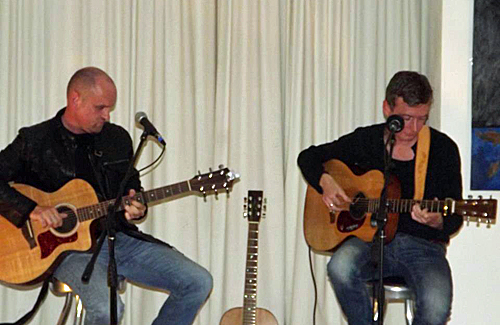
A few days ago we had our music shoot for our TV show. As well as the guest and the demo, we also had to have a music segment at the end. The university had kindly provided us with a band, TJ & Murphy, and after choosing a song at a showcase they did for us a few weeks ago, we were given that song and the lyrics so that the director could create an imaginative camera script.


By watching other music performances on television I noticed that the filming of a performance is a lot different to the filming of an interview. It requires a lot more interesting shots including zooming in and out, the use of pull focus, and plenty of pans across. 

Our filming went well however I have to admit that I let the side down. As I've mentioned, camera work isn't my strong point, especially in highly pressured situations. I am good with handheld camcorders, SLRs and the Sony Z1s, but when they are in a TV studio, I just freeze up and get nervous so my nerves distract me. I know this is something I need to work on and I'm definitely going to use my spare time to become more comfortable with cameras as it is best to go into the media industry with as many skills as possible. 

Thursday, 6 December 2012

Digital Media Cultures Essay

After weeks of lectures, it was finally time to choose our essay question. As with all projects and essays I ever do, I always aim to choose to do it on something that I am really interested in so that I can expand my knowledge in those areas. My central interest is television as this is where I hope to see my career go when I graduate. My secondary interest is radio as I love doing my weekly show with James Dunn, Stay Fresh, Liverpool (https://www.facebook.com/StayFreshLiverpool) so whenever I can involve these aspects into my degree I love it because I know that I will work so much harder if I enjoy it. 

However looking at the questions available, I also needed to be a sensible student and look at what question I can see myself getting the best marks on as obviously the higher the better. I didn't feel that any of the questions relating to television were going to produce my strongest answers so I began to look at what other areas I was interested in, and what questions looked more suitable for me. 

I eventually chose the question, "Assess how the internet has changed the music industry?". I felt confident with this as I already knew of a few reasons so I just had to go and research these reasons in depth using books and academic journals and apply this to the question. Me and deadlines have an unusual relationship. I prefer to wait till the last possible minute as then I can feel the pressure and it gets the adrenaline going and I do all the work to a high standard. Some people argue that this means that I rush it or I do no work but this is definitely not true. I work more efficiently quicker and under pressure which I think is an excellent skill to have as the media is a high pressure industry with tight deadlines. 

As this is my first essay that I have ever properly researched and referenced I hope I do really well on it! 

Sunday, 2 December 2012

Applied Media Research - X Factor

The other show that I chose to research before the group decided on our final 3 was The X Factor. This is another one of my favourite programmes, and I'm an active user of their multi platform services so it wasn't much trouble to research!

The X Factor
The X Factor is one of the country's biggest talent shows so it is only to be expected that it would have a strong multi platform presence as it is essential to keep momentum going. 

The key element of The X Factor's multiplatform programming is their mobile app which features a range of behind the scenes footage, providing fans with an insight into what goes into making the show, what the contestants go through, and allows fans to learn more about their favourite contestant. There were videos of the performances and judges comments for people who missed the live show, backstage videos showing makeup and singing tutorials, interviews sponsored by Talk Talk in which fans could interact and send in their own questions, backstage photos, footage from the Xtra Factor for people who missed that show, exclusive messages from the contestants, insights into what goes into the styling of the contestants and interviews with them about their style. The App also allowed for fans to have their say about what they thought, with regular live votes throughout the show about who was the best dressed judge and if judges were right in their opinion. Throughout the week there were more votes for fans to take part in to keep them entertained and interested whilst the show wasn’t on, on things such as, who was their favourite judge and if the right person went home that week.


 Another one of the App’s unique selling points was the ‘Tap to Clap’ game in which fans, whilst a contestant is performing, can access the app and vote whether they are enjoying the performance by either repeatedly pressing a “Boo” or a “Clap” button, the more they press this, the further along the scale their vote goes, to whatever end they want, either the red zone meaning they hate it, or the green zone meaning they loved it.
 With the polls for fans and the ‘Tap to Clap’, fans were able to see what other people were voting as the app allowed for fans to login via Facebook so they could see what their friends were voting for, and so they could share what they thought with their Facebook friends.
·      The App also allowed you to login via twitter to get an update on all of the contestants twitter accounts that you follow.

I found that the app allowed for fans to keep interacting with the show throughout the week when the show wasn't on, which kept them interested till the weekend as you could track contestant's progress. In today's world, audiences tend to be fickle with shows they watch and get bored and switch off easily so it is extremely important for fans to stay gripped. 

·      Fans could also use the official X Factor Facebook and Twitter pages to interact with the show. Nowadays it is vital for all major shows to have official social media pages as it has become a key marketing technique to drum up attention for a show. Also fans like to feel like they can directly contact the show with their thoughts and opinions and feel like they are cared about. During the live shows, the Facebook page posted backstage pictures of the judges and contestants and asked fans to comment on their views of that particular performance, making fans feel like their opinions mattered. The official ‘X Factor’ Facebook page had a link to a ‘Talk Talk’ page in which they regularly had webcahts with different contestants enabling fans to send in their questions to their favourite contestant.The official ‘X Factor’ Twitter page often asked for fans to tweet in requests for certain contestants to say hi to them via an ‘X Factor’ sign which was a photo of a contestant with a written piece of paper saying hi to that twitter user and then their autograph. For fans to get this, they often had to be the fastest tweeter in reply to the ‘X Factor’s tweet asking for the next line of lyrics from a song. For fans being asked by their favourite show to interact with them is a great honour to them and they feel like they are worth something. If fans feel they are important to the show's success, they will keep tuning in week after week. The great success of the show's social netowrking sites is shown in numbers, with the Facebook page having over 6.5 MILLION likes and the twitter having over 2.8 million followers. 


·      The ‘X Factor’ also has a big following on Youtube as fans can go back and view performances from any series as many times as they like allowing contestants to potentially gain an international following if their video goes viral.  In 2012, every audition clip, live performance and behind the scenes interview were put on the official Youtube channel, the app and the website – previously only selected content was available on each medium.  The Youtube channel managed to generate around 30 million video views a week, compared to 12 million from previous series. 75% of these views were from outside the UK showing the international popularity of the programme. The channel now has over 1.3 million subscribers and over 1.4 billion views overall. The videos also regularly make the most viewed lists on YouTube. This shows that the need for shows to be cross platform is essential and can help make a show even more successful as the way in which people watch and interact with TV is different – people like to be able to access it anywhere, anytime on all the platforms, and share clips that they enjoy with their friends.
·

·      After the success of X Factor UK’s attempt at being multiplatform, it was only natural for the American version of the show to take this on for fans of the American show.
·      This was shown to be successful as they won 3 awards in the 2012 Social TV Awards: ‘Best TV Show Specific Social TV Award’, ‘Best Social TV Integration of Twitter’ and ‘Best of Show’ – all for the X Factor Cross Platform Experience.
·      Don Fox, Vice President of Brand Entertainment for Fox stated that “Digital became a high priority for us – much more than in the past” and “the buzz was undeniable” with the show regularly being in the top 5 most talked about shows over social media
·      Sponsors set up their own social media efforts, asking fans to interact with the show more, for example, ‘Pepsi Choice Performance’ where fans could vote on a contestant’s song choice, wardrobe style, dance and set style. ‘Verizon’ used touch voting  where customers with Android phones could vote by just touching a contestant’s photo

    I really enjoyed researching into the X Factor's multiplatform services as I use them myself and find them entertaining. I was shocked to find out just how successful they were and this proves that making a popular show multiplatform on a range of devices that also allow audience participation and gives exclusive content anywhere and anytime is crucial in the success of a show. 


·